
Love is not only about feelings. It is also about communication, self-awareness, emotional maturity, boundaries, trust, timing, values, and choices.
Many people want a healthy relationship, but they do not know how to build one. Some people keep choosing emotionally unavailable partners. Some couples repeat the same arguments. Some singles feel confused about dating. Some people lose themselves in love. Some people struggle with jealousy, fear of abandonment, low confidence, family pressure, or heartbreak.
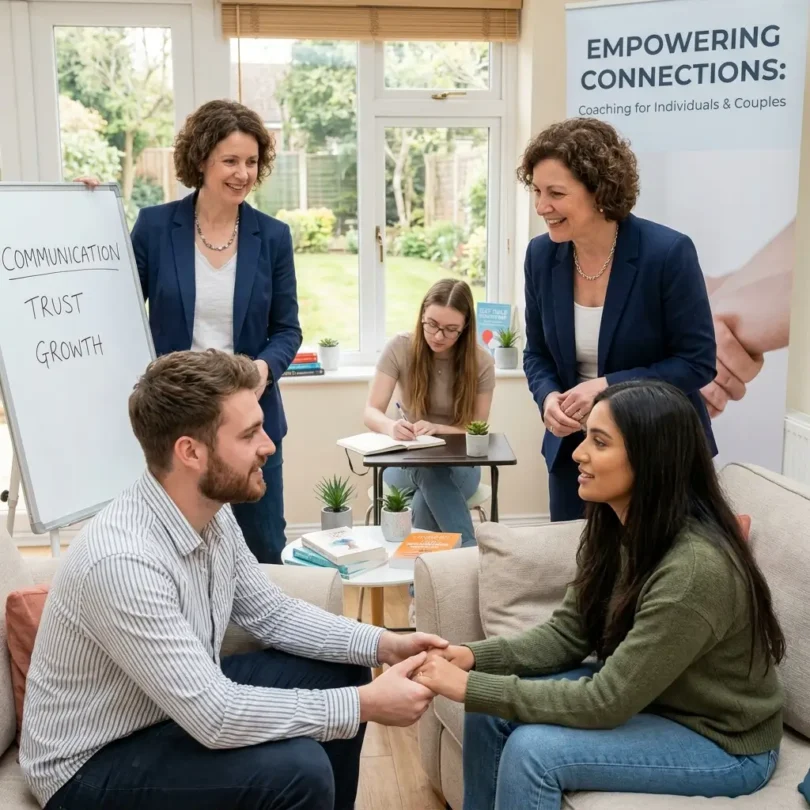
Relationship coaching programs are designed to help people improve relationship skills, dating confidence, communication, emotional awareness, and personal growth.
A relationship coach is not always the same as a therapist. Therapy is usually provided by licensed mental health professionals and may treat mental health conditions, trauma, depression, anxiety, abuse recovery, or deep emotional wounds. Coaching is usually more goal-oriented and future-focused. It may help clients clarify goals, change patterns, improve communication, build confidence, or create better relationship habits.
Grand Canyon University’s psychology/counseling comparison explains that therapy often focuses on the reasons behind behaviors and thought patterns, while coaching focuses more on how clients can overcome current problems and change current behaviors.
Relationship coaching can be helpful, but choosing carefully is important. Coaching is less regulated than therapy in many places. Some coaches are highly trained and ethical. Others may have little training, use manipulative sales tactics, make unrealistic promises, or give advice that is not suitable for serious mental health or safety situations.
This guide compares the best relationship coaching program types for couples and singles, explains how coaching differs from therapy, what credentials to check, what red flags to avoid, and how to choose a safer program.
Important Relationship, Coaching and Mental Health Disclaimer
This article is for general informational purposes only. It is not medical, mental health, legal, domestic violence, dating safety, marriage counseling, therapy, or professional advice.
Relationship coaching is not a substitute for licensed therapy, psychiatric care, crisis support, domestic violence support, legal advice, or emergency help.
If you are in immediate danger, experiencing abuse, threats, coercive control, stalking, violence, sexual pressure, or fear of retaliation, contact local emergency services, a domestic violence hotline, or trusted local support immediately.
If you are experiencing severe depression, panic, trauma symptoms, self-harm thoughts, or a mental health crisis, seek support from a licensed mental health professional or emergency service.
What Is Relationship Coaching?
Relationship coaching is a personal development service that helps people improve relationship-related goals.
It may help with:
- Dating confidence
- Communication
- Emotional awareness
- Boundaries
- Self-worth
- Relationship patterns
- Conflict habits
- Attachment awareness
- Breakup recovery
- Trust-building
- Marriage goals
- Intimacy conversations
- Compatibility questions
- Decision-making
- Personal growth
- Relationship expectations
- Long-distance relationship skills
- Healthy dating behavior
A relationship coach may work with:
- Singles
- Dating couples
- Married couples
- Divorced people
- Breakup survivors
- People re-entering dating
- Engaged couples
- People struggling with confidence
- People with repeated relationship patterns
- Couples wanting communication improvement
Relationship Coaching vs Couples Therapy
Relationship coaching and couples therapy may overlap, but they are not the same.
Relationship Coaching
Best for:
- Goal setting
- Communication skills
- Dating strategy
- Confidence building
- Healthy habits
- Personal growth
- Relationship education
- Future planning
- Accountability
- Practical action steps
Coaching is often future-focused and action-oriented.
Couples Therapy
Best for:
- Deep emotional wounds
- Trauma
- Mental health symptoms
- Severe conflict
- Infidelity recovery
- Abuse concerns
- Depression
- Anxiety
- Attachment trauma
- Family-of-origin issues
- Relationship distress requiring clinical care
Couples therapy is usually provided by licensed mental health professionals.
A relationship coach may be helpful for growth. A therapist is usually better when there is mental health complexity, trauma, abuse, or severe relationship distress.
Who Should Consider Relationship Coaching?
Relationship coaching may help if you:
- Keep choosing the wrong partners
- Struggle to communicate needs
- Avoid difficult conversations
- Feel anxious while dating
- Need help setting boundaries
- Want to rebuild confidence after breakup
- Want to improve marriage communication
- Want better conflict habits
- Feel confused about relationship goals
- Want to understand dating patterns
- Need accountability
- Want to prepare for marriage
- Want to improve emotional maturity
- Want to stop people-pleasing
- Want to date with intention
Who Should Choose Therapy Instead?
Therapy may be more appropriate if you are dealing with:
- Depression
- Anxiety disorder
- Trauma
- PTSD
- Self-harm thoughts
- Panic attacks
- Domestic violence
- Coercive control
- Sexual abuse
- Substance use
- Eating disorder
- Severe grief
- Severe jealousy or control
- Emotional abuse
- Childhood trauma
- Relationship fear linked to trauma
- Ongoing crisis
Coaching can support growth, but it should not treat mental health conditions unless the coach is also a qualified licensed professional working within their license.
Best Relationship Coaching Programs for Couples and Singles
Below are strong program types and platforms to compare. Availability, pricing, coaching credentials, program structure, refund policies, and provider quality can change, so always verify details directly before joining.
1. Growing Self Relationship Coaching
Best for: Relationship growth, breakup recovery, dating and marriage support
Good for: Singles, couples, engaged partners, breakup survivors
Main strength: Relationship-focused services with coaching and counseling-style options
Growing Self is a relationship-focused platform that offers services around dating coaching, relationship coaching, breakup recovery, premarital counseling, marriage counseling, and personal growth.
It is especially relevant for people who need emotional support around love, dating, commitment, communication, and healing.
Key Features
- Relationship coaching
- Dating coaching
- Breakup recovery support
- Premarital counseling
- Marriage counseling options
- Online sessions
- Individual and couples options
- Relationship-focused providers
- Personal growth support
- Emotional healing focus
Why Growing Self Is Good
Growing Self is useful because it focuses deeply on relationship and emotional growth rather than general life coaching only.
It may help people who want to understand their patterns, improve confidence, heal from heartbreak, or strengthen a relationship.
Best Fit
Growing Self may fit:
- Singles wanting dating clarity
- Couples wanting communication support
- People recovering from breakup
- Engaged couples
- Married couples
- People with relationship anxiety
- People wanting emotional growth
Possible Downsides
Users should check whether they are booking coaching or therapy. Coaching and therapy are different services, and provider credentials can vary.
2. Relationship Hero
Best for: On-demand relationship coaching
Good for: Dating questions, breakup confusion, relationship decisions
Main strength: Fast access to coaching-style support
Relationship Hero is known for online relationship coaching that may help users discuss dating, breakup, communication, and relationship issues with a coach.
It may be useful for people who need practical conversation and guidance quickly.
Key Features
- Online relationship coaching
- Individual relationship support
- Dating questions
- Breakup support
- Communication advice
- On-demand style access
- Session-based coaching
- Goal-focused conversations
- App or web access, depending on service
Why Relationship Hero Is Good
Some people need someone to help them think clearly before sending a message, making a breakup decision, or repeating an unhealthy pattern.
Relationship Hero-style coaching may help users slow down and choose better responses.
Best Fit
Relationship Hero may fit:
- Singles
- Dating users
- People in confusing relationships
- Breakup survivors
- People needing quick coaching
- People wanting practical guidance
- Users who do not need therapy
Possible Downsides
Relationship coaching is not therapy. It should not be used as a replacement for licensed mental health care, domestic violence support, or crisis support.
3. ICF-Credentialed Relationship Coach
Best for: Professional coaching with recognized ethical standards
Good for: Singles, couples, personal growth, communication goals
Main strength: Coaching credential and ethical framework
The International Coaching Federation is one of the best-known organizations in professional coaching. ICF says its Code of Ethics sets standards of conduct based on core values and ethical principles and provides the basis for ethics training in ICF-accredited programs.
ICF also describes credentials such as ACC and PCC. Its credential overview says ACC requires 60+ hours of education and 100+ hours of coaching experience, while PCC requires 125+ hours of education and 500+ hours of coaching experience.
Key Features
- Coach-specific education
- Coaching ethics standards
- Credential verification
- Goal-focused sessions
- Relationship pattern work
- Communication coaching
- Accountability
- Personal growth structure
- Non-therapy support
Why ICF-Credentialed Coaching Is Good
An ICF credential does not make someone a therapist, but it can show that the coach has completed a recognized coaching pathway and follows professional ethics.
This may reduce risk compared with choosing a random social media coach with no training.
Best Fit
An ICF-credentialed relationship coach may fit:
- Singles wanting dating goals
- Couples wanting communication growth
- People wanting coaching structure
- Professionals wanting relationship-life balance
- People wanting accountability
- Users who value ethical coaching standards
Possible Downsides
ICF credentials are coaching credentials, not therapy licenses. If mental health care is needed, choose a licensed therapist.
4. Gottman-Informed Relationship Coaching or Workshops
Best for: Couples wanting research-informed communication tools
Good for: Married couples, engaged couples, long-term partners
Main strength: Structured relationship education
Gottman-informed workshops, coaching, or therapy-style programs are popular among couples because they focus on communication, friendship, conflict management, and relationship habits.
Some providers are licensed therapists trained in Gottman methods. Others may be coaches or educators using relationship education tools.
Key Features
- Couples communication tools
- Conflict management education
- Relationship assessments
- Friendship and intimacy exercises
- Repair attempts
- Love maps
- Shared meaning
- Workshop format
- Couples-focused learning
Why It Is Good
Couples often need practical tools, not only emotional discussion.
A structured relationship education approach can help partners understand how they argue, how they reconnect, and how they repair after conflict.
Best Fit
Gottman-informed programs may fit:
- Couples wanting better communication
- Engaged couples
- Married couples
- Couples with recurring arguments
- Couples wanting relationship education
- Partners willing to practice exercises
Possible Downsides
If the relationship involves abuse, fear, coercion, or severe distress, a workshop or coaching program may not be safe or sufficient. Licensed therapy or safety support may be needed.
5. Dating Coach for Singles
Best for: Dating confidence and partner selection
Good for: Singles, divorced people, people returning to dating
Main strength: Practical dating strategy and confidence building
A dating coach helps singles improve dating habits, communication, confidence, profile presentation, boundaries, and partner selection.
Dating coaching may focus on:
- Online dating profile
- Messaging
- First date confidence
- Red flags
- Boundaries
- Attachment patterns
- Self-worth
- Dating goals
- Compatibility
- Rejection resilience
- Relationship readiness
Why Dating Coaching Is Good
Many people do not need therapy. They need clarity, confidence, and better dating habits.
A dating coach can help singles stop repeating the same mistakes and date more intentionally.
Best Fit
Dating coaching may fit:
- Singles
- Divorced people
- Widowed people ready to date
- People returning to dating
- People with low confidence
- People confused by online dating
- People choosing unavailable partners
- People wanting better boundaries
Possible Downsides
Dating coaches are not always licensed mental health professionals. If dating problems are connected to trauma, abuse, severe anxiety, or depression, therapy may be safer.
6. Breakup Recovery Coaching
Best for: Healing after heartbreak and rebuilding confidence
Good for: Breakups, divorce recovery, emotional dependence, self-worth
Main strength: Emotional recovery and future-focused rebuilding
Breakup recovery coaching helps people move through the emotional and practical aftermath of relationship loss.
It may help with:
- No-contact planning
- Emotional withdrawal
- Social media boundaries
- Self-worth
- Rumination
- Closure
- Rebuilding identity
- Dating again
- Avoiding toxic cycles
- Understanding patterns
- Creating a new routine
Why Breakup Recovery Coaching Is Good
Breakup pain can feel like grief. A coach can help create structure when emotions feel chaotic.
It can be especially helpful for people who are not in crisis but need support to stop replaying the past.
Best Fit
Breakup recovery coaching may fit:
- Recently single people
- Divorce recovery users
- People trying no-contact
- People with heartbreak pain
- People rebuilding confidence
- People wanting future-focused support
Possible Downsides
If breakup pain includes severe depression, panic, self-harm thoughts, stalking behavior, or trauma, therapy or crisis support is needed.
7. Premarital Coaching Program
Best for: Engaged couples and serious partners
Good for: Marriage preparation, expectations, communication
Main strength: Preventive relationship planning
Premarital coaching helps couples discuss important topics before marriage.
It may include:
- Communication styles
- Conflict habits
- Money expectations
- Family boundaries
- Religion and values
- Children
- Intimacy
- Household responsibilities
- Career plans
- In-law expectations
- Emotional needs
- Long-term goals
Why Premarital Coaching Is Good
Many marriage problems begin with unspoken expectations.
Premarital coaching helps couples talk before problems become serious.
Best Fit
Premarital coaching may fit:
- Engaged couples
- Couples planning marriage
- Long-term partners
- Couples from different cultures
- Couples with family pressure
- Couples wanting strong foundations
Possible Downsides
Premarital coaching is not a substitute for therapy when there is trauma, abuse, severe conflict, or untreated mental health issues.
8. Marriage Communication Coaching
Best for: Couples who want better daily communication
Good for: Married couples, long-term partners, parents
Main strength: Practical communication and conflict tools
Marriage communication coaching focuses on how partners speak, listen, repair, and handle disagreements.
It may help with:
- Arguments
- Defensiveness
- Criticism
- Emotional distance
- Silent treatment
- Poor listening
- Parenting stress
- Money discussions
- Household conflict
- Repair conversations
Why It Is Good
Many couples do not need to separate. They need better tools.
Communication coaching can help partners stop turning every disagreement into a war.
Best Fit
Marriage communication coaching may fit:
- Married couples
- Parents
- Long-term couples
- Partners with repeated arguments
- Couples wanting better listening
- Couples not needing therapy
Possible Downsides
If there is betrayal, domestic abuse, trauma, addiction, or serious emotional harm, therapy or specialized support may be needed.
9. Attachment-Based Relationship Coaching
Best for: People repeating anxious or avoidant relationship patterns
Good for: Dating anxiety, fear of abandonment, emotional distance
Main strength: Pattern awareness and self-understanding
Attachment-based coaching focuses on how people connect, fear, withdraw, cling, avoid, or react in relationships.
It may help people understand patterns such as:
- Anxious attachment
- Avoidant attachment
- Fearful-avoidant patterns
- Emotional dependency
- Fear of abandonment
- Fear of intimacy
- Push-pull dynamics
- Overthinking messages
- Choosing unavailable partners
Why It Is Good
Many relationship problems repeat because people do not understand their emotional pattern.
Attachment-based coaching may help users recognize triggers and respond more consciously.
Best Fit
Attachment coaching may fit:
- Singles with dating anxiety
- Couples with push-pull cycles
- People who overthink relationships
- People who fear abandonment
- People who avoid intimacy
- People wanting pattern awareness
Possible Downsides
Attachment issues may be connected to trauma or childhood wounds. If symptoms are deep or painful, licensed therapy may be more appropriate.
10. Group Relationship Coaching Program
Best for: Affordable learning and community support
Good for: Singles, women’s groups, men’s groups, couples education
Main strength: Lower cost and shared learning
Group coaching programs may include live classes, discussion groups, workbooks, community forums, and weekly exercises.
They may focus on:
- Dating confidence
- Emotional intelligence
- Communication
- Breakup recovery
- Marriage skills
- Boundaries
- Self-worth
- Masculine/feminine dynamics
- Relationship readiness
- Conflict resolution
Why Group Coaching Is Good
Group coaching can be more affordable than private coaching.
It also helps people see that they are not alone.
Best Fit
Group coaching may fit:
- Budget-conscious users
- People wanting community
- Singles wanting dating support
- People wanting accountability
- Couples wanting education
- Users comfortable sharing in groups
Possible Downsides
Group coaching is less private. It may not be suitable for trauma, abuse, crisis, or highly personal situations.
Quick Comparison Table
| Program Type | Best For | Main Strength | Best User Type |
|---|---|---|---|
| Growing Self | Dating, breakup, relationship growth | Relationship-focused services | Singles and couples |
| Relationship Hero | On-demand guidance | Quick coaching access | Dating/confused users |
| ICF-Credentialed Coach | Ethical coaching structure | Credential and standards | Goal-focused clients |
| Gottman-Informed Program | Couples communication | Research-informed tools | Couples |
| Dating Coach | Partner selection | Dating strategy | Singles |
| Breakup Recovery Coach | Healing after heartbreak | Emotional rebuilding | Breakup survivors |
| Premarital Coaching | Marriage preparation | Future planning | Engaged couples |
| Marriage Communication Coach | Daily conflict skills | Communication tools | Married couples |
| Attachment-Based Coach | Pattern awareness | Emotional pattern insight | Anxious/avoidant users |
| Group Coaching | Affordable learning | Community support | Budget users |
How to Choose the Best Relationship Coaching Program
1. Decide Whether You Need Coaching or Therapy
Choose coaching if you need:
- Dating strategy
- Communication skills
- Goal setting
- Confidence building
- Relationship education
- Accountability
- Personal growth
- Breakup rebuilding
- Marriage preparation
Choose therapy if you need:
- Trauma healing
- Mental health treatment
- Domestic violence support
- Anxiety or depression care
- Deep emotional wounds
- Crisis support
- Abuse recovery
- Psychiatric care
2. Check Credentials
A coach may have:
- ICF credential
- Relationship coaching certification
- Counseling background
- Psychology degree
- Therapy license
- Marriage education training
- Coaching school certificate
- Specialized relationship training
Ask what the credential means.
Not every “certified relationship coach” has the same training.
3. Check Ethics and Boundaries
A professional coach should:
- Explain scope of services
- Avoid pretending to be a therapist
- Keep client information private
- Avoid manipulative sales tactics
- Refer to therapy when needed
- Avoid unrealistic guarantees
- Respect client autonomy
- Use clear contracts
- Explain fees
- Avoid dependency
ICF’s Code of Ethics says it supports integrity, confidentiality, professionalism, ethical reflection, and standards of conduct in coaching relationships.
4. Check Program Structure
Ask:
- Is it one-on-one or group?
- Is it live or recorded?
- Are sessions video or phone?
- Is messaging included?
- Are worksheets included?
- Is there a workbook?
- How long is the program?
- Is there homework?
- Is there community support?
- Is there a refund policy?
5. Compare Pricing
Relationship coaching may be priced as:
- Per session
- Monthly package
- 3-month program
- 6-month program
- Group course
- Membership
- Workshop
- Intensive
- Retreat
- Digital course
Ask for total cost before joining.
6. Avoid Guaranteed Results
No coach can guarantee:
- Your ex will return
- Your marriage will be saved
- You will find love in 30 days
- Your partner will change
- You will never feel anxious again
- You will attract a perfect partner
- You will avoid heartbreak forever
Real coaching supports growth. It does not control other people.
7. Read Reviews Carefully
Reviews can help, but do not rely only on testimonials.
Look for:
- Specific outcomes
- Balanced feedback
- Clear complaints
- Refund issues
- Sales pressure
- Coach responsiveness
- Program quality
- Ethical concerns
8. Check Safety Policies
Relationship coaching should have clear guidance for abuse, crisis, and unsafe relationships.
If a coach tells someone to stay in an abusive relationship or “communicate better” with a dangerous partner, that is a serious red flag.
9. Ask About Confidentiality
Ask:
- Are sessions recorded?
- Who can access messages?
- Is group content private?
- Are testimonials used?
- Is client data shared?
- Are sessions confidential?
- What are confidentiality limits?
10. Trust Fit
The coach should feel:
- Respectful
- Clear
- Nonjudgmental
- Professional
- Honest
- Safe
- Practical
- Realistic
Do not hire someone who shames, pressures, manipulates, or promises magical results.
Red Flags in Relationship Coaching Programs
Red Flag 1: “Get Your Ex Back Guaranteed”
No one can guarantee another person’s feelings or choices.
Red Flag 2: “Save Your Marriage in 7 Days”
Relationship repair takes time and both partners’ effort.
Red Flag 3: No Clear Credentials
Avoid coaches who hide training or experience.
Red Flag 4: High-Pressure Sales Calls
Be cautious if the coach pressures you to pay immediately.
Red Flag 5: Blaming One Gender for Everything
Extreme gender-based blame can create unhealthy relationship beliefs.
Red Flag 6: Encouraging Manipulation
Avoid programs teaching games, emotional control, jealousy tactics, or deception.
Red Flag 7: No Refund Policy
Read payment terms carefully.
Red Flag 8: Claims to Treat Trauma Without License
Trauma treatment should be provided by qualified licensed professionals.
Red Flag 9: Ignoring Abuse
If there is violence, coercion, stalking, or fear, safety comes first.
Red Flag 10: Creating Dependency
A coach should help you grow, not make you dependent.
Best Relationship Coaching by Need
Best for Singles
Choose:
- Dating coach
- Relationship readiness coach
- Attachment-based coach
- Group dating program
- ICF-credentialed coach
Focus on confidence, boundaries, partner selection, and communication.
Best for Couples
Choose:
- Gottman-informed program
- Marriage communication coaching
- Relationship-focused coaching
- Premarital coaching
- Couples workshop
Focus on communication, repair, expectations, and shared goals.
Best for Breakup Recovery
Choose:
- Breakup recovery coach
- Relationship-focused therapist if grief is severe
- Group support
- Self-worth coaching
Focus on healing, boundaries, and rebuilding identity.
Best for Marriage Preparation
Choose:
- Premarital coaching
- Premarital counseling
- Gottman-informed workshop
- Faith-based premarital education if desired
Focus on expectations, finances, family, values, intimacy, and conflict.
Best for Relationship Anxiety
Choose:
- Attachment-informed coaching for mild issues
- Licensed therapist for severe anxiety
- CBT-based support
- Relationship education
If anxiety is intense or disruptive, therapy is safer.
Best for Personal Growth
Choose:
- ICF-credentialed coach
- Emotional intelligence coach
- Communication coach
- Relationship education program
- Group coaching
Focus on self-awareness, emotional maturity, and healthier choices.
Relationship Coaching for Singles
Singles may use coaching to answer:
- Why do I choose the wrong people?
- Why do I chase unavailable partners?
- Why do I lose myself in relationships?
- Why do I fear being alone?
- How do I set boundaries?
- How do I date with confidence?
- How do I stop overthinking messages?
- How do I know if someone is right for me?
- How do I avoid red flags?
- How do I heal before dating again?
A good dating or relationship coach does not teach manipulation. They help you become more honest, clear, and emotionally mature.
Relationship Coaching for Couples
Couples may use coaching to improve:
- Listening
- Conflict repair
- Emotional connection
- Shared goals
- Trust habits
- Money conversations
- Parenting discussions
- Intimacy communication
- In-law boundaries
- Daily appreciation
- Stress management
Relationship coaching works best when both partners are willing to participate.
If one partner uses coaching to control the other, the process can become unhealthy.
Relationship Coaching After Breakup
After a breakup, coaching may help with:
- No-contact planning
- Ending emotional dependency
- Understanding patterns
- Rebuilding confidence
- Reducing social media checking
- Handling loneliness
- Avoiding rebound choices
- Reclaiming identity
- Preparing for healthier dating
But if the breakup caused severe depression, panic, self-harm thoughts, or trauma symptoms, therapy is more appropriate.
Relationship Coaching and Emotional Poetry Audience
People who love poetry often feel deeply.
They may understand longing, silence, heartbreak, memory, rejection, and hope. But feeling deeply can sometimes lead to emotional confusion.
Relationship coaching may help emotional people:
- Love without losing themselves
- Speak clearly instead of silently suffering
- Set boundaries without guilt
- Stop romanticizing pain
- Choose consistency over chemistry alone
- Understand red flags
- Stop chasing unavailable people
- Build self-worth outside relationships
- Communicate needs early
- Heal before repeating patterns
Poetry can express pain. Coaching can help change patterns.
Common Relationship Coaching Mistakes
Mistake 1: Choosing a Coach Instead of Therapy When You Need Therapy
Coaching is not mental health treatment.
Mistake 2: Buying a Program Because You Are Heartbroken
Do not buy expensive programs while emotionally desperate.
Mistake 3: Trusting Guaranteed Results
No program controls another person’s choices.
Mistake 4: Ignoring Red Flags
Check credentials, pricing, refund policy, and ethics.
Mistake 5: Expecting the Coach to Decide for You
A coach should guide thinking, not control your life.
Mistake 6: Not Doing the Work
Relationship growth requires practice.
Mistake 7: Using Coaching to Manipulate a Partner
Healthy coaching builds honesty, not control.
Mistake 8: Joining Group Coaching Without Privacy Awareness
Group programs are less private than one-on-one sessions.
Mistake 9: Not Checking Scope
A coach should explain what they do and do not provide.
Mistake 10: Ignoring Safety
If there is abuse, coaching is not the first solution. Safety support is.
Questions to Ask Before Joining a Relationship Coaching Program
Ask:
- What are your credentials?
- Are you a coach, therapist, or both?
- Are you licensed as a mental health professional?
- What training do you have?
- Do you follow a code of ethics?
- What is the program length?
- Is it one-on-one or group?
- What results are realistic?
- What is the total cost?
- Is there a refund policy?
- Are sessions confidential?
- Is there messaging support?
- What happens if I need therapy?
- Do you work with couples or singles?
- Do you handle breakup recovery?
- What is your policy on abuse or unsafe relationships?
- Can I cancel?
- Are there testimonials I can review?
- What homework is included?
Relationship Coaching Checklist
Before choosing a program, check:
- Clear credentials
- Clear scope
- Ethical standards
- Transparent pricing
- No guaranteed love claims
- No manipulation tactics
- Privacy policy
- Refund policy
- Safety policy
- Realistic program goals
- Professional communication
- Good fit with your need
- Therapy referral when needed
- No pressure selling
- Positive but balanced reviews
Final Verdict: What Are the Best Relationship Coaching Programs?
The best relationship coaching program depends on your goal.
For most users:
- Best relationship-focused platform: Growing Self
- Best on-demand coaching style: Relationship Hero
- Best professional credential path: ICF-credentialed relationship coach
- Best couples communication education: Gottman-informed program
- Best for singles: Dating coach
- Best after heartbreak: Breakup recovery coaching
- Best before marriage: Premarital coaching
- Best for married couples: Marriage communication coaching
- Best for repeated patterns: Attachment-based coaching
- Best affordable community option: Group relationship coaching
If you are single, choose coaching that helps you build self-worth, boundaries, and better partner selection. If you are in a relationship, choose coaching that improves communication and shared responsibility. If you are heartbroken, choose recovery support that helps you rebuild without chasing pain. If you are dealing with abuse, trauma, depression, or crisis, choose licensed therapy or urgent support instead of coaching.
The best relationship coach does not promise perfect love. They help you become more honest, aware, calm, and capable of building healthier relationships.
FAQs About Relationship Coaching Programs
What is relationship coaching?
Relationship coaching is a goal-focused personal development service that helps people improve dating, communication, boundaries, confidence, conflict habits, and relationship decisions.
Is relationship coaching the same as therapy?
No. Therapy is usually provided by licensed mental health professionals and may treat mental health conditions, trauma, anxiety, depression, or deep emotional pain. Coaching is usually more future-focused and goal-oriented.
Are relationship coaches licensed?
Not always. Coaching is less regulated than therapy in many places. Some coaches have strong credentials, while others may have little training. Check credentials carefully.
What is the best relationship coaching program?
Growing Self, Relationship Hero, ICF-credentialed coaches, Gottman-informed programs, dating coaches, breakup recovery coaches, premarital coaches, and group coaching programs are all worth comparing.
Is relationship coaching good for singles?
Yes, it may help singles improve dating confidence, boundaries, communication, partner selection, and relationship readiness.
Is relationship coaching good for couples?
Yes, it may help couples improve communication, expectations, conflict habits, and shared goals. Couples with severe distress, trauma, or abuse may need therapy instead.
Can relationship coaching save a marriage?
It may help some couples improve communication and connection, but no coach can guarantee that a marriage will be saved.
How much does relationship coaching cost?
Costs vary widely. Coaches may charge per session, monthly packages, group programs, workshops, intensives, or long-term programs.
What credentials should a relationship coach have?
Look for coaching education, ICF credentials, relationship-specific training, ethics standards, professional experience, or mental health licensure if therapy is needed.
What is an ICF credential?
ICF describes coaching credentials such as ACC and PCC. Its credential page says ACC requires 60+ hours of education and 100+ hours of coaching experience, while PCC requires 125+ hours of education and 500+ hours of coaching experience.
When should I choose therapy instead of coaching?
Choose therapy if you have trauma, depression, anxiety, abuse concerns, self-harm thoughts, severe relationship distress, or mental health symptoms.
Are online relationship coaching programs safe?
They can be useful when ethical, transparent, and realistic. Avoid programs with guaranteed results, manipulation tactics, unclear credentials, high-pressure sales, or no safety policy.