
Anger is a normal human emotion.
It can appear when someone feels disrespected, ignored, betrayed, controlled, rejected, humiliated, hurt, afraid, or treated unfairly. In relationships, anger may come after repeated arguments, jealousy, broken trust, family pressure, financial stress, emotional distance, or years of unspoken pain.
But when anger becomes uncontrolled, it can damage love, family, work, reputation, health, and peace.
Some people shout. Some break things. Some threaten. Some become silent and cold. Some send angry messages. Some react quickly and regret it later. Some carry anger inside until it becomes stress, anxiety, bitterness, or emotional distance.
Anger management does not mean “never feel angry.” It means learning how to notice anger, understand triggers, calm the body, choose better words, solve problems, and express emotions without hurting yourself or others.
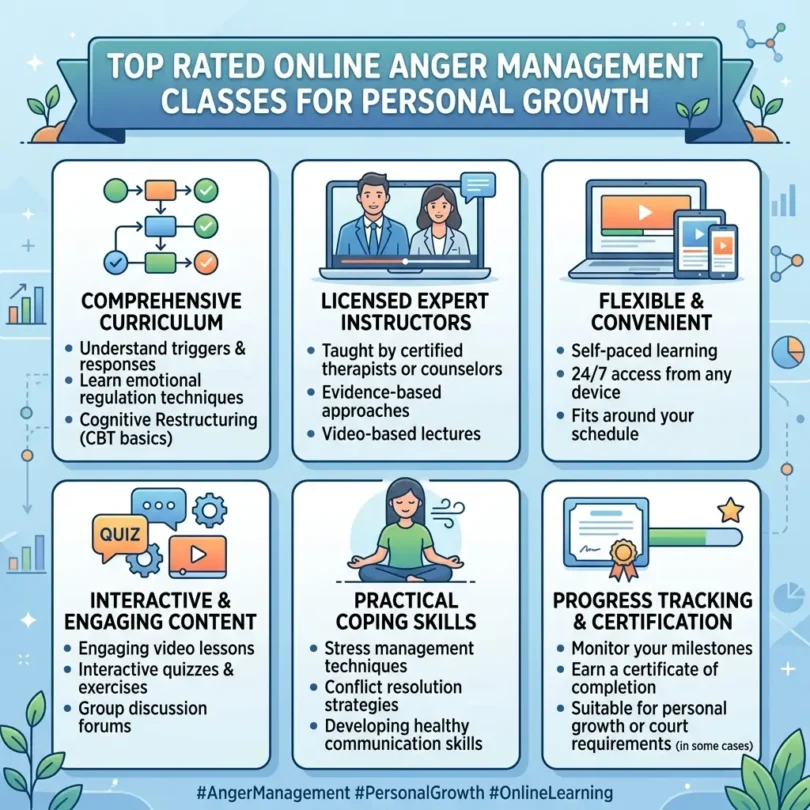
Online anger management classes can help people learn these skills from home. They may be useful for personal growth, relationship repair, workplace improvement, parenting, court requirements, probation requirements, or simply becoming more emotionally mature.
The American Psychological Association explains that psychologists can help people recognize and avoid triggers that make them angry and provide ways to manage anger that cannot be avoided. The APA also says relaxation tools such as deep breathing and relaxing imagery can help calm angry feelings.
Mayo Clinic recommends practical anger management steps such as thinking before speaking, expressing concerns once calm, exercising, taking a timeout, identifying solutions, using “I” statements, and avoiding grudges.
This guide compares the best online anger management classes for personal and relationship growth, explains how to choose a course, what court-approved means, what certificates mean, and when therapy may be better than a class.
Important Mental Health, Legal and Safety Disclaimer
This article is for general informational purposes only. It is not medical, mental health, legal, court, probation, domestic violence, anger treatment, or professional advice.
Anger management classes are not a substitute for emergency help, domestic violence intervention, psychiatric care, substance use treatment, or therapy when those are needed.
If you may hurt yourself or someone else, feel out of control, are in immediate danger, or are experiencing a crisis, contact local emergency services immediately.
If you are in the United States and need urgent emotional support, call or text 988 for the 988 Suicide & Crisis Lifeline. The National Domestic Violence Hotline also provides confidential 24/7 support for people experiencing relationship abuse or unsafe situations.
If you are required to complete anger management by a court, probation officer, employer, school, lawyer, or agency, verify the exact class requirements before enrolling. Not every online class will be accepted.
What Is an Online Anger Management Class?
An online anger management class is a structured course that teaches people how to understand and manage anger.
It may include lessons about:
- Anger triggers
- Emotional awareness
- Stress response
- Communication skills
- Conflict resolution
- Impulse control
- Relaxation techniques
- Accountability
- Healthy boundaries
- Relationship patterns
- Workplace behavior
- Parenting stress
- Problem-solving
- Forgiveness and resentment
- Anger journaling
- Timeouts
- De-escalation skills
Online anger management classes may be self-paced or instructor-led.
They may include:
- Videos
- Reading lessons
- Quizzes
- Worksheets
- Workbooks
- Final exam
- Certificate of completion
- Court-friendly documentation
- Live group sessions
- One-on-one coaching
- Therapist-led sessions
Who Should Consider Online Anger Management Classes?
Online anger management classes may help people who:
- React too quickly
- Shout during arguments
- Send angry texts
- Struggle with jealousy
- Break things when angry
- Feel easily disrespected
- Regret what they say later
- Have relationship conflict
- Have workplace conflict
- Struggle with parenting anger
- Feel emotionally overwhelmed
- Want better self-control
- Need a certificate
- Have court or probation requirements
- Want to improve communication
- Want personal growth
Anger classes may also help people who grew up in homes where shouting, threats, silence, or emotional pressure were normal.
Anger Management Class vs Therapy
An anger management class and therapy are not the same.
Anger Management Class
Best for:
- Learning practical skills
- Understanding triggers
- Completing structured lessons
- Getting a certificate
- Court or workplace requirements
- Personal improvement
- Mild to moderate anger issues
Therapy
Best for:
- Deep emotional wounds
- Trauma
- Depression
- Anxiety
- PTSD
- Relationship trauma
- Domestic violence concerns
- Substance use
- Severe anger
- Childhood abuse history
- Personality patterns
- Self-harm thoughts
- Violent thoughts
Some people need both a class and therapy.
A class teaches skills. Therapy explores deeper causes and helps build long-term emotional change.
Best Online Anger Management Classes
Below are commonly compared online anger management options. Pricing, certificates, court acceptance, class length, instructor access, and availability can change, so always verify directly before enrolling.
1. Online-Therapy.com Anger Management Tools
Best for: CBT-based anger work
Good for: Personal growth, relationship conflict, stress-related anger
Main strength: Structured therapy-style tools
Online-Therapy.com is known for cognitive behavioral therapy-based tools. While it is broader than a simple anger class, its structured worksheets and therapist-supported plans may help people who want to understand anger patterns more deeply.
Key Features
- CBT-based structure
- Worksheets
- Therapist feedback, depending on plan
- Live sessions, depending on plan
- Messaging options
- Self-guided tools
- Emotional regulation focus
- Stress and anxiety support
- Useful for anger-related thought patterns
Why It Is Good
CBT can help people identify the thought patterns that intensify anger.
For example:
- “They always disrespect me.”
- “I must win this argument.”
- “If I stay quiet, I am weak.”
- “They did this on purpose.”
- “I cannot calm down until they apologize.”
Changing these patterns can reduce emotional reactions.
Best Fit
Online-Therapy.com may fit:
- People who like worksheets
- People with stress-related anger
- People who want CBT tools
- People who want therapy-style support
- People working on relationship conflict
- Users who want structured emotional growth
Possible Downsides
It may not be accepted as a court-approved anger management class unless the court specifically approves it. Always verify requirements.
2. Open Path Collective Anger Management Therapy
Best for: Affordable therapist-led anger support
Good for: People needing lower-cost professional help
Main strength: Lower-cost therapy directory
Open Path Collective is a nonprofit therapist directory that helps people find lower-cost therapy with participating providers.
It may help users find therapists who work with anger, emotional regulation, conflict, relationships, anxiety, trauma, or stress.
Key Features
- Lower-cost therapy directory
- Licensed therapists
- Online and in-person options
- Sliding-scale fees
- Individual therapy
- Couples therapy options
- Family therapy options
- Therapist choice
- Useful for uninsured users
- Possible anger management focus depending on therapist
Why It Is Good
Some people need more than a class. They need a therapist to understand where anger comes from.
Open Path may help users access professional support at a lower cost than many private therapy options.
Best Fit
Open Path may fit:
- Budget-conscious users
- People without insurance
- People needing therapy, not only class
- People with relationship anger
- People with trauma-related anger
- People needing long-term support
Possible Downsides
Open Path is a directory, not a single anger management course. Users must contact therapists and confirm whether the provider offers anger management support.
3. BetterHelp
Best for: Flexible online therapy for anger and relationship stress
Good for: Personal anger, communication problems, emotional triggers
Main strength: Large therapist network
BetterHelp connects users with licensed therapists through video, phone, live chat, or messaging, depending on therapist availability and plan.
It is not a standard certificate-based anger management class, but it may help people work on anger, relationship conflict, stress, self-esteem, and emotional regulation.
Key Features
- Licensed therapists
- Video sessions
- Phone sessions
- Live chat
- Messaging
- Therapist matching
- Ability to switch therapists
- Flexible scheduling
- App and website access
- Support for anger-related concerns
Why It Is Good
BetterHelp may be useful for people who want to understand their anger in the context of relationships, grief, anxiety, low self-worth, or past emotional pain.
Best Fit
BetterHelp may fit:
- People wanting therapy from home
- People with relationship conflict
- People with stress-related anger
- People who prefer messaging
- First-time therapy users
- People wanting flexible scheduling
Possible Downsides
It may not meet court-ordered anger management requirements unless the court or referring agency accepts it. Users should also review privacy policies carefully.
4. Talkspace
Best for: Therapy platform with insurance or employer benefit potential
Good for: Anger connected to anxiety, depression, relationship stress, work stress
Main strength: Licensed provider network and plan options
Talkspace offers online therapy and psychiatry options depending on location, plan, and eligibility.
It may help users whose anger is connected to mental health symptoms or ongoing emotional stress.
Key Features
- Licensed therapists
- Messaging therapy
- Video sessions
- Psychiatry options in some areas
- Insurance options
- Employer benefit access
- App-based platform
- Therapist matching
- Support for stress and relationship issues
Why It Is Good
Talkspace may be useful for people who want ongoing therapy and may have insurance or employer benefits.
It can help if anger overlaps with depression, anxiety, burnout, or relationship pain.
Best Fit
Talkspace may fit:
- Users with insurance
- Employees with mental health benefits
- People wanting therapy plus messaging
- People with stress and anger
- People needing more than a self-paced class
- People with emotional regulation concerns
Possible Downsides
Talkspace is therapy, not automatically a court-approved anger class. Verify before enrolling if a certificate is required.
5. Udemy Anger Management Courses
Best for: Low-cost personal growth learning
Good for: Self-improvement, communication skills, emotional awareness
Main strength: Affordable self-paced courses
Udemy offers many self-paced anger management and emotional intelligence courses created by different instructors.
These can be useful for personal growth, but quality varies by instructor.
Key Features
- Self-paced learning
- Low-cost course options
- Video lessons
- Worksheets depending on course
- Lifetime access on many courses
- Course ratings and reviews
- Certificates of completion from platform
- Many instructor options
Why It Is Good
Udemy can be a budget-friendly option for people who want to learn anger management basics without therapy.
It may help users learn:
- Emotional intelligence
- Communication skills
- Stress control
- Conflict management
- Self-awareness
- Relaxation techniques
Best Fit
Udemy may fit:
- Personal growth learners
- People on a low budget
- Users who do not need court approval
- People wanting basic education
- People who like self-paced study
Possible Downsides
Udemy certificates may not be accepted by courts, probation, employers, or agencies. Courses are not the same as therapy.
6. Coursera Emotional Intelligence and Conflict Courses
Best for: Professional growth and workplace anger control
Good for: Workplace conflict, leadership, communication
Main strength: University-style online learning
Coursera offers courses related to emotional intelligence, conflict management, communication, negotiation, and workplace behavior.
While not always labeled as anger management, these courses can support better emotional control and relationship skills.
Key Features
- University-style courses
- Professional certificates depending on course
- Communication skills
- Emotional intelligence
- Conflict management
- Leadership development
- Workplace focus
- Flexible learning
- Peer and assignment features depending on course
Why It Is Good
Some people struggle with anger at work more than at home.
Workplace anger may appear as:
- Harsh emails
- Conflict with coworkers
- Impatience
- Defensive reactions
- Poor listening
- Leadership problems
- Resentment
- Burnout
Coursera-style courses may help with professional emotional control and communication.
Best Fit
Coursera may fit:
- Professionals
- Managers
- Leaders
- Remote workers
- Students
- People wanting workplace communication skills
- Users focused on career growth
Possible Downsides
These courses may not be anger management certificates and may not meet legal or court requirements.
7. AngerMasters Online Classes
Best for: Certificate-based online anger management classes
Good for: Personal growth and possible documentation needs
Main strength: Anger management class format with certificate options
Some online providers specialize in anger management classes with certificates of completion. AngerMasters is one example of a provider category users may compare.
These services may offer different class lengths such as 4-hour, 8-hour, 12-hour, 16-hour, 26-hour, or longer programs.
Key Features
- Online anger management lessons
- Self-paced access
- Certificate of completion
- Different class lengths
- Court-oriented options
- Printable documentation
- Communication and trigger lessons
- Conflict resolution topics
- Stress management tools
Why It Is Good
Certificate-based classes may be useful when users need documentation for court, probation, employer, school, or personal records.
Best Fit
Certificate-based anger classes may fit:
- People needing a certificate
- Court-referred users
- Probation-referred users
- Workplace-referred users
- People wanting structured anger education
- Self-paced learners
Possible Downsides
Court acceptance is not automatic. The user must confirm the exact provider, class length, format, and certificate requirements with the referring authority before enrolling.
8. Logan Social Services Online Anger Management
Best for: Court-style anger management class options
Good for: Users needing class-hour choices and certificates
Main strength: Multiple online class lengths and documentation
Some providers, such as Logan Social Services and similar programs, offer online anger management classes in different hour lengths with certificates.
These are often marketed toward court, probation, workplace, or personal requirements.
Key Features
- Online class format
- Multiple class lengths
- Certificate of completion
- Self-paced lessons
- Anger triggers
- Communication skills
- Conflict resolution
- Domestic conflict awareness, depending on class
- Printable certificate
- Support contact
Why It Is Good
This style of class may help users who need a specific number of hours.
For example:
- 4-hour class
- 8-hour class
- 12-hour class
- 16-hour class
- 26-hour class
- 52-hour class
Best Fit
These classes may fit:
- Court-referred users
- Probation requirements
- Employer requirements
- School requirements
- Personal growth users
- Users needing documentation
Possible Downsides
Some courts or agencies may reject online-only or self-paced classes. Always get approval first.
9. Local Court-Approved Online Anger Management Program
Best for: Court or probation requirements
Good for: People ordered to complete anger management
Main strength: Higher chance of acceptance if pre-approved locally
If a court, probation officer, lawyer, employer, or agency requires anger management, the best option is often a local or approved provider.
The provider may offer online classes, live virtual sessions, or hybrid programs.
Key Features
- Court-recognized provider
- Local approval
- Live or self-paced format
- Certificate
- Progress reports
- Attendance tracking
- Instructor verification
- Specific hour requirements
- Compliance documentation
Why It Is Good
Court requirements can be strict.
A class may need to be:
- Live
- Instructor-led
- Specific number of hours
- Approved by the court
- Approved by probation
- From a licensed provider
- Completed by a deadline
- Documented with official certificate
An online provider’s own claim of “court approved” may not be enough. Approval often depends on the specific court or agency.
Best Fit
Local court-approved programs may fit:
- Court-ordered users
- Probation-referred users
- Domestic case requirements
- Legal compliance needs
- Users needing official documentation
Possible Downsides
May cost more than self-paced classes. Scheduling may be less flexible.
10. Local Therapist or Counselor Offering Online Anger Management
Best for: Deeper emotional change and relationship repair
Good for: Anger linked to trauma, depression, anxiety, jealousy, relationship pain
Main strength: Personalized professional support
A local licensed therapist offering online anger management may be the best choice for many people.
A therapist can customize support based on your history, triggers, relationships, mental health, and goals.
Key Features
- Licensed professional
- Individual sessions
- Online therapy
- Anger trigger work
- Emotional regulation skills
- Relationship communication
- Trauma-informed care
- Personalized treatment
- Possible insurance coverage
- Local referrals if needed
Why It Is Good
Some anger is not only about temper. It may be connected to:
- Childhood trauma
- Feeling rejected
- Fear of abandonment
- Shame
- Depression
- Anxiety
- PTSD
- Alcohol or substance use
- Relationship insecurity
- Family pressure
- Grief
- Stress overload
A therapist can help with deeper work than a class.
Best Fit
A local therapist may fit:
- People with severe anger
- People with relationship damage
- People with trauma history
- People with anxiety or depression
- People who feel out of control
- People needing personalized support
- People wanting long-term change
Possible Downsides
Therapy may cost more than a class and may not produce a court certificate unless arranged and accepted.
Quick Comparison Table
| Option | Best For | Main Strength | Best User Type |
|---|---|---|---|
| Online-Therapy.com | CBT-based anger tools | Worksheets and therapist support | Structured users |
| Open Path Collective | Affordable therapy | Lower-cost therapist directory | Budget-conscious users |
| BetterHelp | Flexible online therapy | Large therapist network | Relationship stress users |
| Talkspace | Insurance/employer therapy | Licensed platform access | Insured users |
| Udemy | Low-cost learning | Self-paced courses | Personal growth learners |
| Coursera | Workplace skills | Emotional intelligence courses | Professionals |
| AngerMasters-style classes | Certificate needs | Class-hour options | Documentation users |
| Logan Social Services-style classes | Court-style classes | Multiple hour options | Compliance users |
| Local court-approved program | Legal requirements | Local acceptance | Court-ordered users |
| Local therapist | Deep change | Personalized support | Severe anger users |
How to Choose the Best Online Anger Management Class
1. Know Why You Need the Class
Your reason matters.
Are you taking anger management for:
- Personal growth?
- Relationship improvement?
- Workplace behavior?
- Court order?
- Probation?
- School requirement?
- Employer requirement?
- Parenting?
- Domestic conflict?
- Legal case?
- Self-control?
If it is for personal growth, you have more flexibility.
If it is for court, you must follow exact requirements.
2. Confirm Court Approval Before Paying
If the class is court-ordered, ask the referring authority:
- Is online class accepted?
- Does it need to be live?
- Does it need to be instructor-led?
- How many hours are required?
- Does the provider need to be licensed?
- Is self-paced accepted?
- Is a certificate enough?
- What must the certificate include?
- Is this specific provider accepted?
- What is the deadline?
Do not rely only on a website saying “court approved.”
3. Choose the Right Class Length
Common anger management class lengths may include:
- 4 hours
- 8 hours
- 12 hours
- 16 hours
- 26 hours
- 36 hours
- 52 hours
Personal growth users may start with shorter classes.
Court or probation users must follow the required length.
4. Check Instructor or Provider Credentials
Look for:
- Licensed therapist
- Certified anger management specialist
- Counselor
- Social worker
- Psychologist
- Court-recognized provider
- Clear credentials
- Transparent contact information
5. Review Course Topics
A good anger management class should cover:
- Anger triggers
- Warning signs
- Stress response
- De-escalation
- Communication
- Conflict resolution
- Accountability
- Timeouts
- Emotional awareness
- Problem-solving
- Relationship impact
- Prevention plan
- Relapse prevention
6. Check Certificate Details
If a certificate matters, check whether it includes:
- Your name
- Course name
- Course length
- Completion date
- Provider name
- Provider contact details
- Signature
- Verification method
- Case number, if needed
- Court/probation wording, if required
7. Check Refund Policy
If your court rejects the class, can you get a refund?
Read refund terms before paying.
8. Choose Therapy If Anger Is Severe
A class may not be enough if:
- You threaten people
- You break things
- You feel out of control
- You scare your partner or children
- You have violent thoughts
- You use substances when angry
- Anger affects work or legal life
- You feel shame after episodes
- Your partner feels unsafe
- You have trauma symptoms
Seek professional therapy or urgent help where needed.
9. Check Privacy
Anger management may involve sensitive personal information.
Review privacy policy, data storage, certificate sharing, and third-party tracking.
10. Avoid Unrealistic Promises
Avoid programs that claim:
- “Guaranteed court acceptance everywhere”
- “Instant certificate without work”
- “Cure anger in one hour”
- “No effort required”
- “Official government-approved for all courts”
Real change takes effort.
Skills You Learn in Anger Management
1. Trigger Awareness
You learn what situations activate anger.
Common triggers include:
- Feeling disrespected
- Feeling ignored
- Jealousy
- Criticism
- Rejection
- Financial stress
- Family pressure
- Traffic
- Work stress
- Parenting stress
- Feeling controlled
- Feeling powerless
2. Body Warning Signs
Anger often starts in the body before words come out.
Signs may include:
- Fast heartbeat
- Tight jaw
- Hot face
- Clenched fists
- Shaking
- Tight chest
- Loud voice
- Fast breathing
- Restlessness
- Muscle tension
3. Pause Skills
A pause can prevent regret.
Examples:
- Count to 10
- Step away
- Take deep breaths
- Drink water
- Leave the room safely
- Delay texting
- Ask for a break
- Write before speaking
- Return when calm
4. Communication Skills
Anger management teaches how to express feelings without attacking.
Instead of:
“You never care about me.”
Try:
“I feel hurt when I do not feel heard. I need us to talk calmly.”
5. Problem-Solving
Anger often becomes stronger when people focus only on blame.
Problem-solving asks:
- What exactly is the issue?
- What can be changed?
- What do I need?
- What does the other person need?
- What is one practical next step?
6. Accountability
Anger may explain a reaction, but it does not excuse harmful behavior.
Accountability means:
- Owning your words
- Apologizing properly
- Repairing damage
- Changing patterns
- Not blaming others for your reaction
- Creating prevention plans
7. Emotional Regulation
Emotional regulation means managing emotions without being controlled by them.
Tools include:
- Breathing
- Grounding
- Timeouts
- Journaling
- Exercise
- Sleep routines
- Therapy
- Mindfulness
- Healthy boundaries
Anger Management for Relationships
Anger can damage relationships when it becomes:
- Shouting
- Blame
- Insults
- Threats
- Silent treatment
- Stonewalling
- Controlling behavior
- Breaking things
- Jealousy attacks
- Repeated accusations
- Emotional punishment
Online anger management may help partners learn:
- How to pause before reacting
- How to listen
- How to express hurt without attacking
- How to repair after conflict
- How to stop repeating old patterns
- How to set boundaries
- How to reduce resentment
- How to disagree safely
However, if there is abuse, violence, or fear, anger management alone may not be enough. Safety support is more important.
Anger Management for Work
Workplace anger can harm career growth.
It may show as:
- Harsh emails
- Arguments with coworkers
- Impatience
- Conflict with managers
- Defensive reactions
- Passive aggression
- Poor listening
- Burnout
- Resentment
Workplace anger management may focus on:
- Professional communication
- Stress management
- Emotional intelligence
- Leadership skills
- Conflict resolution
- Email tone
- Feedback response
- Boundary setting
- Problem-solving
Anger Management for Parents
Parenting can trigger anger because of exhaustion, stress, noise, financial pressure, and constant responsibility.
Anger management may help parents:
- Pause before yelling
- Repair after mistakes
- Understand triggers
- Use calmer discipline
- Reduce guilt
- Avoid fear-based parenting
- Model emotional control
- Protect children’s emotional safety
If anger becomes frightening, threatening, or physically harmful, seek professional help immediately.
Anger Management for Breakups and Heartbreak
Breakups can trigger intense anger.
A person may feel:
- Betrayed
- Rejected
- Used
- Replaced
- Humiliated
- Jealous
- Abandoned
- Disrespected
Anger management can help prevent:
- Angry messages
- Social media revenge
- Stalking behavior
- Public arguments
- Threats
- Self-destructive actions
- Begging and blaming cycles
- Harassment
- Emotional collapse
Healing after heartbreak requires dignity, distance, support, and self-control.
Common Mistakes in Anger Management
Mistake 1: Thinking Anger Is the Problem
Anger is not always the problem. Uncontrolled reaction is the problem.
Mistake 2: Blaming Everyone Else
Other people may trigger you, but you are responsible for your response.
Mistake 3: Waiting Until You Explode
Act earlier when warning signs begin.
Mistake 4: Using Silence as Punishment
Healthy timeout is different from emotional punishment.
Mistake 5: Apologizing Without Changing
A real apology includes changed behavior.
Mistake 6: Choosing a Fake Court Class
Verify requirements before paying.
Mistake 7: Ignoring Alcohol or Substance Use
Substances can worsen anger and impulse control.
Mistake 8: Not Practicing Skills
Anger management works through repetition.
Mistake 9: Treating the Certificate as the Goal
The real goal is safer behavior.
Mistake 10: Ignoring Therapy When Needed
Deep anger may need professional therapy.
Anger Management Checklist
Before choosing a class, ask:
- Why do I need this class?
- Is it personal or court-required?
- How many hours are required?
- Is online accepted?
- Does it need to be live?
- Does it need a licensed instructor?
- Is a certificate required?
- Will my court or employer accept it?
- What topics are covered?
- Is the cost clear?
- Is the refund policy clear?
- Is privacy explained?
- Are provider credentials shown?
- Do I need therapy instead?
- Is anyone unsafe because of my anger?
- Do I need urgent help?
Final Verdict: What Are the Best Online Anger Management Classes?
The best online anger management class depends on your reason.
For most users:
- Best CBT-based anger support: Online-Therapy.com
- Best affordable therapist-led option: Open Path Collective
- Best flexible therapy platform: BetterHelp
- Best therapy with insurance potential: Talkspace
- Best low-cost self-paced learning: Udemy
- Best professional communication growth: Coursera
- Best certificate-style class: AngerMasters-style online classes
- Best multiple-hour class option: Logan Social Services-style classes
- Best for court requirements: Local court-approved online program
- Best for severe or deep anger: Local licensed therapist
If you need personal growth, a self-paced course may be enough. If you need court approval, verify requirements first. If anger is hurting relationships, therapy may be better. If anyone is unsafe, seek emergency or domestic violence support immediately.
Anger management is not about becoming emotionless. It is about becoming responsible, calm, and strong enough to choose your response.
FAQs About Online Anger Management Classes
What are online anger management classes?
Online anger management classes are structured courses that teach skills for understanding triggers, calming the body, communicating better, and responding to conflict without harmful behavior.
Are online anger management classes worth it?
They can be useful for personal growth, workplace behavior, relationship improvement, and sometimes court requirements if accepted by the referring authority.
Are online anger management classes court approved?
Some may be accepted by some courts, but approval depends on the specific court, probation officer, agency, class length, provider, and format. Always verify before enrolling.
How long are anger management classes?
Common lengths include 4, 8, 12, 16, 26, 36, or 52 hours. Court-ordered users must follow the exact required length.
What do anger management classes teach?
They may teach triggers, warning signs, breathing, timeouts, communication, conflict resolution, accountability, stress management, and relationship repair skills.
Is anger management the same as therapy?
No. A class teaches skills in a structured format. Therapy can explore deeper causes such as trauma, anxiety, depression, relationship wounds, or emotional patterns.
Can anger management help relationships?
Yes, it may help people reduce shouting, improve communication, pause before reacting, and repair conflict patterns. But unsafe or abusive relationships need specialized help.
What is the best anger management class online?
The best choice depends on your goal. Online-Therapy.com, Open Path, BetterHelp, Talkspace, Udemy, Coursera, certificate-based anger classes, and local court-approved programs are all worth comparing.
Can I get a certificate from online anger management?
Many online anger management classes offer certificates. If you need it for court or work, confirm that the certificate will be accepted before paying.
How much do online anger management classes cost?
Costs vary widely. Self-paced courses may be low-cost, while therapist-led sessions or court-approved programs may cost more.
When should I get therapy instead of a class?
Consider therapy if anger feels out of control, scares others, causes relationship damage, involves trauma, includes violent thoughts, or is connected to anxiety, depression, or substance use.
What should I do if I might hurt someone?
Leave the situation safely and contact emergency services, crisis support, or a trusted professional immediately. If someone else is unsafe, their safety comes first.